
Fiberglass Vs. Spray Foam: The Ultimate 10 Round Smackdown
Insulation.
You never see it, but it affects your wallet, your comfort, and even your very health.
With so much riding on what’s in your walls, let’s take a look at the hottest two competitors for insulation in today’s market: Fiberglass vs Spray Foam.
Ding, ding! A 10 round battle of benefits. Let’s begin…
 Dirt, Dust and Allergens
Are you sniffling and sneezing all year round? Your fiberglass insulation might be the cause.
Fiberglass is a porous insulation made, literally, of shards of glass. It’s porous nature gives it that fluffy texture which allows it to insulate. But unfortunately, because of its porous nature, it also traps dirt and dust.
When fiberglass gets dirty, it is less able to insulate effectively, so the dirtier it gets, the lower the R-value gets.
Chances are that your old insulation may look like a 50 year old furnace filter. Gross!
 As air blows through the dirty fiberglass it dislodges
dust and allergens, and circulates them through the air in your home.
This dirty air circulating in your home may be the cause of your chronic sinusitis, or unexplained headaches.
And if you have indoor allergies to start with? Forget about it. That filthy air could make your home unlivable. Not to mention that it isn’t insulating that well either, so not only are you spending more on antihistamines, you’re also paying more out every month to your utility company!
Spray foam insulation, on the other hand, has been preferred by people with indoor allergies for decades. Closed cell spray foam is too dense to allow dirt to collect so it keeps your home’s air clean and healthy.

 Moisture and Mold
Could mold be hiding in your insulation and making you sick?
Remember that fluffy, porous texture that we discussed in #1? Well, that same trait also leads to an inability to resist moisture and condensation.
Once condensation gets inside your fiberglass, that can lead to mold. Plus, moisture greatly degrades the ability of fiberglass to insulate. It settles and sags, and your R-value plummets as your bills rise.
Fiberglass is like a condensation petri dish! And that is terrible news for your health, and your wallet!
A Harvard University study found that over 50% of American homes have mold. Could your home be one of them?
 For the health of your family you should find out. Mold in damp wall insulation can cause headaches, asthma, memory loss, and even lung tissue damage.
But that’s not all.
If there’s mold hidden behind your walls it won’t just make you sick, and raise your utility bills, it get’s even worse…
You see, mold doesn’t like to stay put in one small area, it likes to spread out and make itself at home.
So you can bet on that mold eventually spreading to your studs and drywall. Removing mold and rebuilding damaged structural elements could cost you thousands of dollars.
But, you don’t have to live in fear of mold! Closed cell spray foam resists the moisture penetration that causes mold.
There is no way for moisture to collect in spray foam and nowhere for mold to hide. You can even look for foam with an ASTM G21 certified rating, which prevents mold growth on the face of the foam.
 Pesky Pests
We already know that fiberglass traps dirt, but there may be something more sinister lurking in your walls. Bugs and rodents just love fiberglass.
You may even have creepy crawlers in your fiberglass this very minute!
Insects can crawl straight through fiberglass insulation. And once they’ve made their way in, they may decide to set up shop.
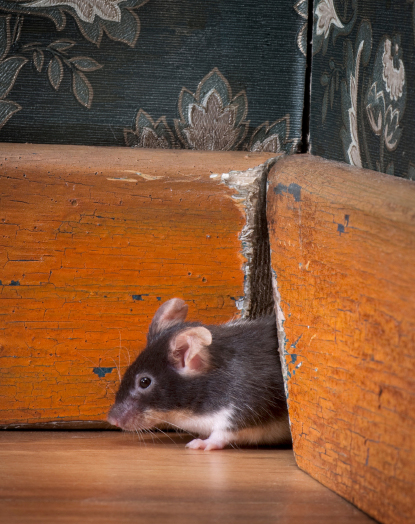 And mice?
Fiberglass is both a tasty snack and the perfect home. Heck, fiberglass looks almost exactly like the nests they create for themselves.
That’s all well and good for them, but when pests move into your walls they bring along a whole host of health hazards.
Animal droppings are unpleasant enough as it is, but they can also spread bacteria, viruses, and infections. They can even pack a double whammy by bringing insects along with them.
If this information doesn’t have your skin crawling by now, I don’t know what will.
Luckily, you can avoid these tiny terrors by insulating with spray foam.
Spray foam insulation is extremely dense so those critters can’t push their way into your home, and it has no nutritional value.
 Noisy Neighbors
A rebellious teenager in the apartment next door, a construction site in front of your house, an airplane flying overhead… With bad insulation, these perfectly normal occurrences can feel like they are so loud they are in the room with you.
Fiberglass does not stop airflow so it can’t do a thing to stop all of those intrusive sounds from making their way straight into your home.
Luckily, with spray foam you can finally enjoy Peace and Quiet.
Both open and closed cell spray foam can significantly muffle that noise.
That’s because spray foam blocks sound transfer by stopping airflow.

 The Test of Time
Lots of things sag with age, but insulation shouldn’t be one of them.
One of the flaws of fiberglass is the way it is secured into place. Fiberglass batts are stapled into stud cavities around their edges, and loose fill fiberglass is blown in to wall cavities.
The problem here is that since they are not fully adhered into place, they sag.
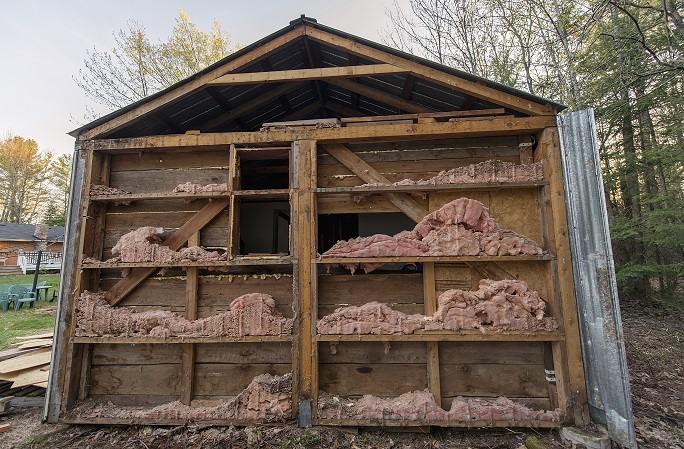 Loose filled fiberglass settles into place, fiberglass degrades and can slowly sag out of place.
And when that happens you can be left with ZERO R-Value in some parts of your home.
And zero R-Value = lots of drafts and huge energy bills.
Spray foam cures within minutes to a rigid form, so it doesn’t sag or settle. This means you never have to worry about the hands of time affecting your insulation.
 Safety - Look But Don’t Touch!
While fiberglass might look like a nice, cozy blanket, it is in fact spun glass. And like broken glass, it is something you should avoid touching at all costs.
Handling fiberglass can leave you with cuts or rash-like redness on your skin.
But that isn’t the only danger. Cutting fiberglass (which is almost always required to properly fit fiberglass batts into non-standard stud bays) produces a dangerous dust. This dust can be inhaled, or get into your eye causing infections and irritation.
That is some scary stuff, especially since children who may not know about fiberglass’s dangers could be drawn to the cotton candy-like insulation.
To learn more about fiberglass safety concerns check out this fact sheet from the Illinois Department of Public Health: http://www.idph.state.il.us/envhealth/factsheets/fiberglass.htm
With spray foam kits it is safe to the touch the foam just an hour after it has been applied. With fiberglass you have to wear protective gear anytime you move it.
 Sneaky Smell
Have you ever walked down the fiberglass section of your local hardware store and thought you smelled cotton candy?
Chances are it wasn’t just your mind playing tricks on you.
Fiberglass doesn’t just look like cotton candy, it can also smell like it.
 For years fiberglass manufacturers used the dangerous chemical Formaldehyde as a binder. In an effort to remove the chemical from their product one fiberglass company replaced it with what they called a “bio binder”.
Suddenly, customers began reporting that their fiberglass smelled sweet; like candy or cookies. And for some, that smell never left.
The company hasn’t reported the ingredients of the bio-binder, but some have speculated that it may be maltodextrin. That would certainly explain the sweet smell.
Some homeowners have had to remove the offending fiberglass because the scent was so strong it gave them headaches.
Spray foam is a great alternative for those with sensitive noses.
Spray foam insulation has only a mild scent at the time of application. After installation, the scent quickly dissipates.
Check out more about the curious, sweet-smelling fiberglass here:
http://www.greenbuildingadvisor.com/blogs/dept/musings/smelly-fiberglass-batts
http://www.jlconline.com/insulation/overbaked-fiberglass-batts-linked-to-odor-problems.aspx

 Metal Buildings
If you’ve got a metal building then you know how important it is to have good insulation. Metal buildings are prone to condensation, which can lead to rust and corrosion.
Retrofitting an existing metal building with fiberglass is very difficult.
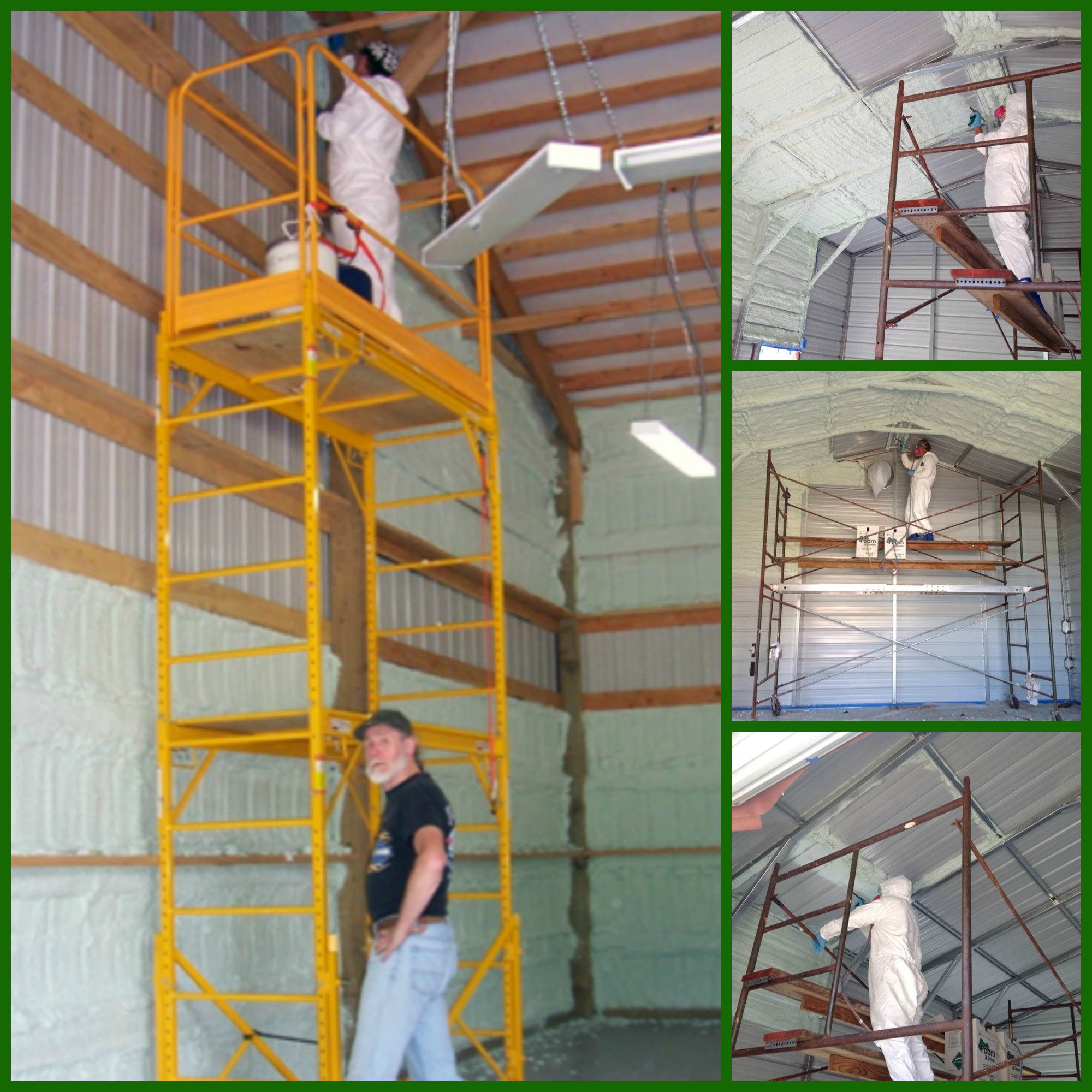 Even if a metal building has been fitted with fiberglass in the typical manner (using plastic sheeting to support it), condensation tends to build behind the plastic, degrading the fiberglass and your R-value along with it.
Moreover, the moisture collection breeds mold, and can sometimes even create a water bubble that releases and makes a huge mess.
Therefore, fiberglass, since it cannot stop air flow and can absorb moisture, is already poorly suited for metal buildings. Then when you consider how quickly the fiberglass is likely to degrade, you can see that it makes a very poor choice for metal buildings.
That’s why more and more Americans are turning to spray foam for their metal buildings and more.
Closed cell spray foam is ideal for these projects because it adheres directly to the metal, and it prevents moisture penetration so you don’t have to worry about condensation or metal corrosion.
 Installation & Odd Spaces
Fiberglass batts are made to fit in standard 16″ or 24″ on center stud cavities.
The only problem with that is that 50% of stud cavities are not standard width!
For the fiberglass to work at all it has to tightly fit into place. If you are insulating a non standard wall cavity you need to measure the batts, cut them and then staple them into place.
Your only other option would be to squish the fiberglass into place, but that just isn’t effective.
Who wants to shove rolls of glass shards into a small space and attempt to staple them in place without dropping anything? No one.
On the other hand, if you can use a garden hose, you can install spray foam insulation. It’s just that easy.
Good spray foam insulation kits are extremely simple to use, and are pre-pressurized so you don’t need any extra equipment to install the foam, you simply pull the trigger and you are good to go.
And insulating with spray foam isn’t just easier than fiberglass, it’s also faster. Much faster.
 REAL Value
Fiberglass has an R-value of only 3 to 3.5 per inch. And, in reality, fiberglass’s real life r-value is much lower than that.
R-Value is tested in an air tight, moisture free lab environment. But since fiberglass can’t stop air leaks, it begins losing r-value from the moment you take it out of it’s package.
And because fiberglass is porous, it can not stop air leakage, no matter how much you use.
When you have air leaks, the outside temperature can creep into your home, while the air you have paid to condition escapes out.
Many people think of drafts as a nuisance. But air leakage is a much larger and more expensive issue than you may realize.
25- 40% of what the average American pays for on their energy bills is air that has escaped straight out of their homes.
The US Department of Energy found that in 2010 Americans wasted roughly $58.3 Billion dollars because of air leaking out of our building envelopes.
And we aren’t just wasting money, we are wasting precious natural resources to heat and cool air that escapes out of our homes.
Luckily, stopping air leaks is easy with the right insulation.
Spray foam insulation is an air barrier, so it stops air leaks dead in their tracks.
Closed cell spray foam has an R-Value of 7 per inch and since it resists air penetration that’s what it stays.
In Closing: Be Good to Yourself
The winner of this bout was, likely, clear to you from round one.
Sure, fiberglass has had a nice long run since it was introduced early last century. In it’s day it was a real champion; introducing insulation to homes that previously had none.
But, along with VCRs, rotary phones, and parachute pants, fiberglass’ day has come and gone, and the modern green world demands a better choice: Spray Foam.
Spray foam insulation knocks out the competition because it protects your wallet, your comfort, and even your health.
So, now that you’re aware of the the fastest, easiest, healthiest insulation on the market, who will you help to save up to 40% off of their energy bills?

